


If You Are in Danger Right Now
If you are in danger right now, call 911. The National Domestic Violence Hotline is free and confidential, 24/7: 1-800-799-7233, or text START to 88788.
Quick exit Leaves this site immediately.
Sol’s Relationship Recovery Program is daytime outpatient treatment for women in Riverside whose depression, anxiety or drinking has become serious after a divorce, a separation, the end of a relationship, or the death of someone close to them. PHP runs Monday to Friday, 9:00 AM to 1:30 PM; IOP is three days a week. Everything happens in one building, with women only in the room.
It treats the condition, not the relationship. There is no couples work here and no marriage counseling, and you do not need your former partner’s agreement or involvement to start.
Key Takeaways
- Who it is for: women whose depression, anxiety, trauma symptoms or substance use have worsened after a relationship ended or someone died.
- What it is: a women-only daytime outpatient program in Riverside (PHP runs Monday to Friday; IOP is three days a week), built on group work, cognitive behavioral therapy and grief counseling.
- What it is not: a weekly evening support group, couples counseling, or marriage counseling.
- How it is decided: an assessment sets your level of care first. The relationship focus is the emphasis inside it, not a separate place you go.
Show all 4 takeaways
Is What I Am Feeling Grief?

Yes, if a relationship ended. You do not need a death for it to be grief.
MedlinePlus, the National Library of Medicine’s patient health service, defines grief as “a reaction to a major loss of someone or something” and states plainly that “the end of a significant relationship may also cause grieving.”
That sentence matters more than it looks. A lot of women arrive here apologizing, because the person they lost is still alive and still walking around Riverside, and somewhere along the way they picked up the idea that this does not count. It counts.
It also does not automatically need treatment. MedlinePlus is direct about this: “Grief should not be prevented because it is a healthy response to loss.” Most people grieve a relationship ending and come out the other side with time, people around them, and no clinician involved at all.
What brings a woman to a program like this one is not grief. It is what grief has turned into, or what it has uncovered. She has stopped eating properly, or stopped going to work, or started drinking every night to get to sleep, or the panic attacks have come back after nine years. That is a different thing, and it has treatment.
Grief or Depression?
Many women wonder about this, so here is the clinical distinction, as the National Cancer Institute sets it out in its bereavement guidance for clinicians.
| Grief | Major depression | |
|---|---|---|
| How the pain arrives | “Painful feelings come in waves, lessen in intensity and frequency over time, and are often intermixed with positive memories” | “Mood and ideation are constantly negative” |
| The prevailing feeling | “Emptiness” | “A long, sustained, depressed mood and an inability to expect pleasure or happiness” |
| How you see yourself | “Self-esteem is usually preserved” | “Feelings of worthlessness and self-loathing are common” |
| If intrusive thoughts come | Generally focused on the person lost, “such as a wish to join the deceased in death” | “More likely directed at self only” |
Two honest caveats. The two can happen at once, and the table does not diagnose anyone. It is here because it gives you language for what you are already noticing, and because you should not have to wait for an assessment to stop wondering whether you are imagining it.
If the second column is describing your last few months, that is worth a phone call.
If someone has passed
If the loss was a death, there is a specific thing worth knowing about, because a lot of women spend a long time assuming they are simply failing at grieving.
The American Psychiatric Association added prolonged grief disorder to the DSM-5-TR in March 2022. For adults, it applies when the death happened at least a year ago and at least three of its symptoms have been present nearly every day for at least the past month, alongside “intense longings for the deceased or preoccupation with thoughts of the deceased.” The listed symptoms include identity disruption, disbelief about the death, avoidance of reminders, intense emotional pain, emotional numbness, difficulty moving on with life, feeling that life is meaningless, and intense loneliness.
Three things the APA’s own framing makes clear, and they are worth holding onto:
- A year is not the diagnosis. As the National Institutes of Health puts it, the term “doesn’t mean that grief that continues beyond one year is, by itself, a disorder.”
- Culture counts. The criteria require that the grieving “exceeds expected social, cultural or religious norms” for that person. There is no universal clock.
- It is uncommon. The American Psychiatric Association estimates that “4%-15% of bereaved adults will experience the persistent symptoms of prolonged grief disorder.”
Two things it does not cover. It is a bereavement diagnosis and it requires a death, so it does not apply to a divorce or a breakup no matter how severe the grieving. And it is not the same as depression: the APA notes that treatments using elements of cognitive behavioral therapy have been found effective in reducing its symptoms, and that “bereavement support groups and peer support can also provide useful social connection.”
Both of those are part of the week here.
What This Program Is Not
Three things, so you can feel sure this is the right fit before you call.
It is not a weekly support group. PHP runs Monday to Friday; IOP is three days a week. If what you are looking for is a divorce support group that meets on a Tuesday evening, say that when you call and we will gently let you know whether we are the right fit for you.
It is not couples counseling or marriage counseling. Sol treats women, individually and in groups of women. There is no joint session, no partner in the room, and no service here aimed at keeping a relationship together or ending it on better terms.
It is not conditional on what you decide about the relationship. Women come here still married, mid-divorce, reconciled, unsure, and years out. None of that changes whether you can be treated.
If the relationship you are leaving is one where you are being hurt, read this part first.
The Office on Women’s Health states that “many abusers get even more violent after their victims leave.” If that is your situation, safety planning comes first, and trained domestic violence advocates are the best people to help with it.
- National Domestic Violence Hotline: call 1-800-799-7233, or text START to 88788, or go to thehotline.org. Free and confidential, 24 hours a day, seven days a week, in many languages.
If you are in immediate danger
Call 911.
If you are in crisis
Call or text 988.
Before you browse
The Office on Women’s Health warns that “anyone with access to your phone or computer can check which websites you visit,” and that it may be safer to use a public computer, such as at a library, or a friend’s phone. Its guidance on leaving an abusive relationship includes a safety plan you can work through.
On couples counseling, specifically. If someone is pushing you toward joint sessions, this is worth knowing. SAMHSA reports that “experts in the field of domestic violence generally do not recommend joint counseling for couples in which intimate partner violence has occurred,” and lists among the reasons that “it can be dangerous; the nonabusing partner may be punished after being honest during sessions.”
You can call Sol at (951) 972-5085 whatever your situation. We will not ask you to leave, or to stay, and we will not tell you what to do about the relationship. If you want to read about why leaving is harder than people outside it understand, we have written about trauma bonding.
What a Week Looks Like

PHP runs Monday to Friday, 9:00 AM to 1:30 PM; IOP is three days a week, 9:00 AM to noon or 10:30 AM to 1:30 PM. Everything happens at 4175 Brockton Avenue in Riverside. Groups are small, about six to eight women, and every group is women only.
What is in the week:
- Grief counseling with Maatisak Gipson, MSW, LCSW, for the loss itself.
- Cognitive behavioral therapy, in group, for the thinking that grief and depression build: that you caused it, that you should be over it, that this is permanent.
- Group therapy with other women, which can feel daunting at first and often becomes a real source of comfort.
- Mindfulness meditation, for the nights and the intrusive replaying.
- Restorative activity time, and a break in the middle of the day.
You are not required to tell the room what happened. Women share at the pace they choose, and no one is put on the spot on a first morning.
Levels of Care
The relationship focus is an emphasis, not a separate program. Your assessment sets the level of care, and the emphasis follows from what is being treated.
PHPPartial hospitalization
Roughly who it suits
The most structured daytime option, for when symptoms are at their heaviest.
Read more
IOPIntensive outpatient
Roughly who it suits
Fewer hours, more room for work and family, still substantial clinical contact.
Read more
OPOutpatient
A clinician works out what is being treated and which level of care fits. See all levels of care or the other program emphases.
How to Get Started
1
Call (951) 972-5085
Call (951) 972-5085 or verify your insurance, and our admissions team responds within 24 hours.
2
A Clinical Assessment
What has been happening, how long, what it is affecting.
3
A Level of Care and a Start Date
You will know both before you commit to anything.
Admissions answers 24 hours a day, 7 days a week.
You Do Not Have to Be Finished Grieving to Ask for Help
Talk to someone at Sol about what the last few months have looked like. Women only, outpatient, in Riverside.
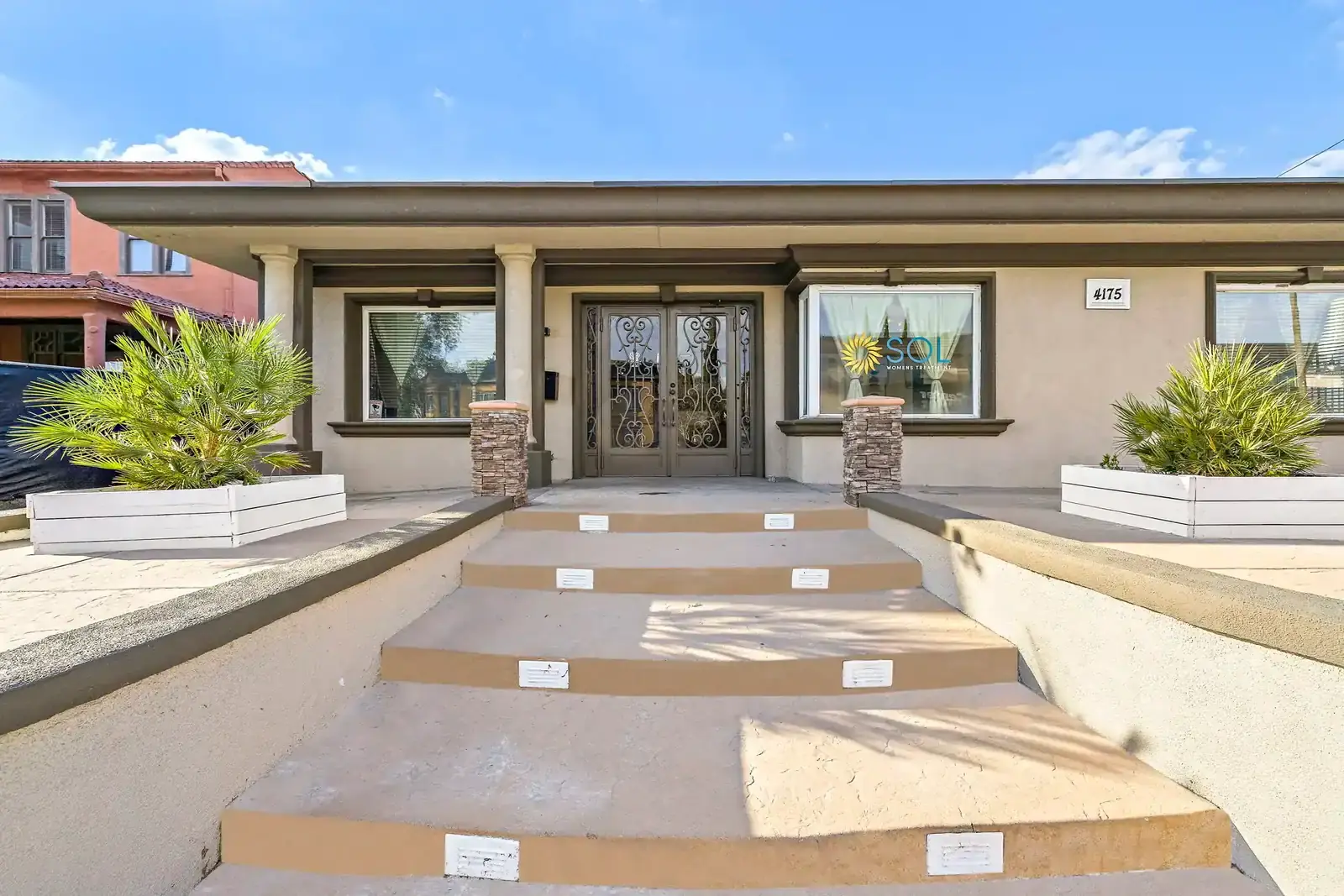
4175 Brockton Avenue, Riverside, CA 92501
Frequently Asked Questions
Our admissions line is answered 24 hours a day, 7 days a week at (951) 972-5085.
Is This a Divorce Support Group?
No. Sol’s program is clinical outpatient treatment: PHP runs Monday to Friday; IOP is three days a week. A divorce support group is usually weekly, usually in the evening, and is not clinical treatment. If a weekly group is what you are looking for, tell us on the call and we will gently let you know rather than book you in.
Do You Offer Couples Counseling or Marriage Counseling?
No. Sol treats women, on their own and in groups of women. There is no joint session and no partner in the room.
Is What I Am Feeling Grief or Depression?
Both are possible and they can happen together. The broad distinction clinicians use is that grief tends to come in waves that ease over time and sits alongside positive memories, while in depression mood stays negative, self-esteem drops and feelings of worthlessness are common. An assessment is how you find out which you are dealing with.
My Divorce Was Two Years Ago. Is It Too Late to Come In?
No, and there is no point at which grief becomes invalid. What matters clinically is not how long ago it happened but what your life looks like now. Women come here years out, often after something else finally tipped it over.
Do I Have to Talk About It in Group?
No. Women share at the pace they choose. Nobody is required to tell the room what happened, and nobody is put on the spot on a first morning.
Someone Died Rather Than Left. Is This the Same Program?
Yes. Bereavement and relationship loss are treated in the same program, with grief counseling as part of the week. If the death was more than a year ago and you are still not functioning, that is worth raising specifically at your assessment.
How Long Does the Program Last?
It depends on your level of care and how you respond, and it is set at assessment rather than in advance. Many women step down from a more structured level to a lighter one rather than stopping outright.
Does Sol Accept My Insurance?
Sol accepts most major insurance plans. Every plan is different, so the quickest way to know is to verify your insurance. Sol does not accept Medi-Cal, Medicaid, Medicare, Molina, IEHP, Kaiser, TRICARE or TriWest. Verify your insurance or call (951) 972-5085, and our admissions team responds within 24 hours.
Show all 8 questions
Medical Disclaimer
This page is for general information and is not a substitute for a clinical assessment, diagnosis or treatment by a qualified professional. Sol Women’s Treatment is a licensed outpatient program, not inpatient or residential care. Individual results vary and no specific outcomes are guaranteed. If you are in crisis, call or text 988. If you are in immediate danger, call 911.
Sources6
- 1.MedlinePlus, National Library of Medicine, Grief. https://medlineplus.gov/ency/article/001530.htm
- 2.National Cancer Institute, Grief, Bereavement, and Coping With Loss (PDQ), health professional version. https://www.cancer.gov/about-cancer/advanced-cancer/caregivers/planning/bereavement-hp-pdq
- 3.American Psychiatric Association, Prolonged Grief Disorder. https://www.psychiatry.org/patients-families/prolonged-grief-disorder
- 4.National Institutes of Health, NIH News in Health, Navigating Grief. https://newsinhealth.nih.gov/2026/07/navigating-grief
- 5.Office on Women’s Health, U.S. Department of Health and Human Services, Leaving an abusive relationship. https://womenshealth.gov/relationships-and-safety/domestic-violence/leaving-abusive-relationship
- 6.Substance Abuse and Mental Health Services Administration, Substance Use Disorder Treatment and Family Therapy, TIP 39. https://www.ncbi.nlm.nih.gov/books/NBK571079/