

What Counts as Misusing a Prescription
NIDA’s definition is three things, and most women only recognize themselves in the first. Misuse of prescription drugs means taking a medication in a manner or dose other than prescribed; taking someone else’s prescription, even if for a legitimate medical complaint such as pain; or taking a medication to feel euphoria.1 Sol treats prescription drug use disorders in Riverside through three substance use levels of care: High-Intensity IOP, IOP and OP.
Notice what is not in it. Nothing about where the drug came from, nothing about whether you have a real condition, and nothing about intent. Taking two when one was prescribed is in the definition. So is taking your own medication earlier than you should.
Key Takeaways
- NIDA defines misuse three ways: taking a medication other than as prescribed, taking someone else’s, or taking it to feel euphoria.1
- The three classes most commonly misused are opioids, CNS depressants including tranquilizers and sedatives, and stimulants.1
- CDC states that anyone who takes prescription opioids can become addicted to them, and is at risk regardless of race, sex, income level or social class.2
- In 2024, 42.3% of people who misused prescription pain relievers last obtained them from a friend or relative, and 43.7% through a prescription or from a healthcare provider.3
- In 2024, an estimated 8.0 million people aged 12 or older misused prescription pain relievers in the past year.3
Show all 5 takeaways
Which Kind of Medication
NIDA groups the most commonly misused prescription drugs into three classes.1 Two of them have their own pages here, with the withdrawal information and treatment detail specific to them.
| Class | Usually prescribed for | Where to read more |
|---|---|---|
| Opioids | Pain | Opioid addiction treatment for women |
| CNS depressants, including tranquilizers, sedatives and hypnotics | Anxiety and sleep disorders | Benzodiazepine addiction treatment for women, and Xanax specifically |
| Stimulants | Attention deficit hyperactivity disorder | This page, below |
If you are not sure which class your medication belongs to, the prescriber or the pharmacist will tell you in one sentence, and so will admissions on the first call.
Tolerance, Dependence, Addiction
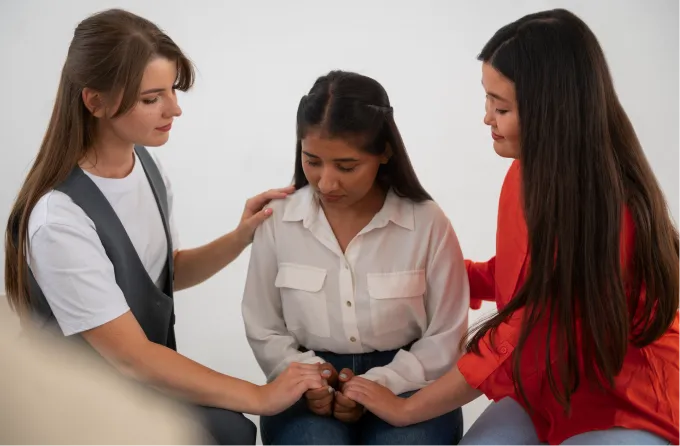
These three get used interchangeably and they are not the same thing. The difference decides what happens next, so it is worth two minutes.
CDC describes tolerance as needing higher doses over time to relieve pain, which puts someone at higher risk for a potentially fatal overdose.2 That is the body getting used to a dose.
CDC describes physical dependence as having withdrawal symptoms when the medication is stopped.2 That is the body having adapted. It happens to people taking medication exactly as directed and it is not a character judgment.
Addiction, or a use disorder, is the third thing: a pattern of use that has taken on a life of its own. CDC’s sentence on it is the one worth carrying: anyone who takes prescription opioids can develop opioid use disorder.4
A woman can be tolerant and dependent without being addicted, and she still cannot simply stop. A woman can be all three. The first call sorts out which, and no version of the answer is a reason not to make it.
Where Prescription Drugs Actually Come From
SAMHSA’s most recent national survey gives a clearer picture of where misused pain relievers come from.
SAMHSA’s 2024 National Survey on Drug Use and Health found that among people aged 12 or older who misused prescription pain relievers in the past year, 42.3% obtained them the last time from a friend or relative in some way, whether given, bought or taken without asking, and 43.7% obtained them through prescriptions or stole them from a healthcare provider, with 40.5% typically getting them through a prescription from one doctor.3
An older figure, 50.5% from a friend or relative for free, comes from SAMHSA data for 2013 to 2014.5
If your medication came from your own doctor, on your own prescription, for your own real condition, you are not alone, and you have not done anything wrong.
Stimulants and ADHD Medication

This is the class with no dedicated page here, and it is the one women ask about most carefully, usually because the prescription is genuinely helping something.
NIDA lists stimulants, most often prescribed to treat attention deficit hyperactivity disorder, as one of the three most commonly misused classes.1 The same definition of misuse applies: a dose or manner other than prescribed, someone else’s prescription, or taking it for euphoria.1
Being prescribed a stimulant for diagnosed ADHD and taking it as directed is treatment, not misuse, and this page is not an argument that it is. If the pattern has changed, though, that is worth saying to someone.
On what treats stimulant misuse: NIDA states there is no FDA-approved medication for stimulant use disorder of any kind.6 The evidence is behavioral, and NIDA names contingency management and cognitive behavioral therapy.
Read about ADHD or methamphetamine.
When the Pill Did Not Come From a Pharmacy
The moment a prescription medication is bought rather than dispensed, the risk changes completely.
DEA reports that many fake pills are made to look like prescription medications including oxycodone, hydrocodone and alprazolam, pressed to look identical to the real thing.7 Of the fentanyl-laced fake prescription pills DEA analyzed in 2022, six out of ten contained a potentially lethal dose of fentanyl.8
CDC has documented overdose deaths identified by pills that appeared to be oxycodone with no oxycodone detected, or appeared to be alprazolam with none detected.9 The pill looked right. The drug on the label was not in it.
There is no way to tell by looking. If it was not dispensed by a pharmacy against a prescription, treat it as an unknown substance, because that is what it is.
Read about fentanyl.
How Women End Up Here

NIDA’s research describes a pathway that is specifically female and almost never discussed. Women are more sensitive to pain than men and more likely to have chronic pain, which NIDA says could contribute to the high rates of opioid prescriptions among women of reproductive age.10
NIDA also reports that women may be more likely to take prescription opioids without a prescription to cope with pain, even when men and women report similar pain levels, and that women are more likely to misuse prescription opioids to self-treat for other problems such as anxiety or tension.10
Many of the women who call us will recognize that last finding. The medication was for pain, and somewhere along the way it started doing a second job: taking the edge off a week that had too much in it.
NIDA also notes women are more likely to seek treatment for misuse of central nervous system depressants.10 Being the group more likely to ask for help does not mean being the group more likely to get the right treatment. On the opioid side, CDC found that among adults who received treatment in 2022, fewer women than men received medication for opioid use disorder.11
Read about anxiety, depression or dual diagnosis.
HALT: Hungry, Angry, Lonely, Tired
HALT is one of the oldest tools in recovery and it survives because it is small enough to use at the moment it is needed. The four words stand for hungry, angry, lonely and tired, and the practice is to run through them before acting on a craving.
It is not a treatment and nobody claims it is. What it does is buy thirty seconds, and it is surprisingly often the case that the answer is one of the four. Hungry, because the day got away. Tired, because it has been like that for a while. Lonely, which for a lot of women is the hardest one to name. Angry, which is usually about something that happened hours ago.
Where it earns its place in prescription medication specifically: the craving for a pill rarely announces itself as a craving. It arrives as a reason. My back is worse today. I cannot face this afternoon. I will not sleep otherwise. HALT is a way of checking whether the reason is the reason.
It works alongside treatment rather than instead of it, and the skills that make it stick are the ones therapy builds.
Read about our therapy approaches or CBT.
What Treatment Involves

It depends on the class. For opioids, three medications are FDA-approved and the detail is on the opioid page. For CNS depressants, NIDA states there are no FDA-approved medications for treating addiction to them, and recommends medically supervised detoxification with gradual tapering alongside behavioral therapy, with the detail on the benzodiazepine page.6 For stimulants, there is no approved medication and treatment is behavioral.
What is common to all three is the part Sol provides: therapy that builds the skills the medication was standing in for, treatment for whatever is underneath, and a structure that holds while the prescribing question gets sorted out with a prescriber.
NIDA notes that cognitive behavioral therapy, which focuses on modifying thinking, expectations and behaviors while increasing skills for coping with life stressors, has been used successfully to help people adapt to discontinuing benzodiazepines.6 The same skills apply more broadly.
Medication management is provided at Sol for co-occurring conditions. Bring the name of every prescriber you currently see to the first call.
How Much Treatment
Typically suits
What the week holds
Read more
High-Intensity IOPMost intensive substance use level
Typically suits
The first weeks, when you want the most structure
What the week holds
Sol’s most intensive substance use level, with days structured like PHP: Monday to Friday, 9:00 AM to 1:30 PM
Read more
IOPIntensive outpatient
Typically suits
The common fit: real treatment alongside work or family
What the week holds
Three days a week, you choose which three, counseling plus group
Read more
OPOutpatient
Typically suits
Protecting a recovery that is holding
What the week holds
Ongoing support and relapse prevention
Read more
If home is part of what makes this hard, our supportive housing affiliate has an all-female home about ten minutes from our treatment center. It is run by a separate organization, and admissions can tell you more.
Starting Treatment
1
Call or Send Your Insurance Details
Admissions answers 24 hours a day, seven days a week.
2
Assessment
A clinician looks at the medication, the dose, how long, who prescribes it, and whether withdrawal needs medical management first.
3
Verify Your Insurance
We contact your plan confidentially and explain what we learn.
4
Start Date
Set around what your week can hold.
Bring every bottle, or photos of the labels, including the ones you think are not part of this. Interactions between prescriptions are a large part of what the assessment is looking at.
In crisis right now? Call or text 988.
It came from a pharmacy, on a prescription, for something real. All of that can be true and it can still have stopped being something you choose.
Frequently Asked Questions
Our admissions line is answered 24 hours a day, 7 days a week at (951) 972-5085.

What Counts as Misusing a Prescription?
NIDA defines it three ways: taking a medication in a manner or dose other than prescribed, taking someone else’s prescription even for a legitimate medical complaint such as pain, or taking a medication to feel euphoria. Where the drug came from is not part of the definition.
Can I Be Addicted If My Own Doctor Prescribed It?
Yes. CDC states that anyone who takes prescription opioids can become addicted to them, and that anyone taking them is at risk regardless of race, sex, income level or social class. It is also worth separating the terms: tolerance, physical dependence and addiction are three different things and you can have one without the others.
Where Do Most Misused Prescription Drugs Come From?
SAMHSA’s 2024 data found 42.3% of people who misused prescription pain relievers last obtained them from a friend or relative, while 43.7% obtained them through a prescription or from a healthcare provider, 40.5% typically from a prescription from one doctor. The older figure of about half coming from friends and family is from 2013 to 2014 data.
What Is the Difference Between Dependence and Addiction?
CDC describes physical dependence as having withdrawal symptoms when the medication is stopped, and tolerance as needing higher doses over time to get the same effect. Both can happen to someone taking a medication exactly as directed. Addiction is a pattern of use that has taken on a life of its own. Dependence still needs a supervised taper even without addiction.
Is Taking My Prescribed ADHD Medication Misuse?
Not if you are taking it as prescribed for a diagnosed condition. NIDA’s definition of misuse is a dose or manner other than prescribed, someone else’s prescription, or taking it for euphoria. If the pattern has changed, that is worth saying to a clinician.
Is There a Medication That Treats Prescription Drug Addiction?
It depends on the class. For opioids, methadone, buprenorphine and naltrexone are FDA-approved. For CNS depressants such as benzodiazepines, NIDA states there are no FDA-approved medications and recommends medically supervised detoxification with gradual tapering alongside behavioral therapy. For stimulants, there is none.
What Does HALT Stand For?
Hungry, angry, lonely, tired. It is a recovery practice of checking those four things before acting on a craving. It is not a treatment, and the reason it earns its place with prescription medication is that a craving for a pill usually arrives disguised as a reason.
How Do I Know If a Pill Is Real?
If it was dispensed by a pharmacy against a prescription, it is. If it was not, you cannot tell by looking. DEA reports fake pills are pressed to look identical to real medications, and CDC has documented overdose deaths where pills appearing to be oxycodone or alprazolam contained neither.
Does Insurance Cover Prescription Drug Treatment?
Every plan is different, so the quickest way to know is to verify your insurance. Sol accepts most major insurance plans, and benefits are confirmed individually before admission. Sol can often work with HMO policies through a single case agreement. Sol does not accept Medi-Cal, Medicaid, Medicare, Molina, IEHP, Kaiser, TRICARE or TriWest.
Show all 9 questions
You Did Not Go Looking for This
SAMHSA found that 40.5% of people who misused prescription pain relievers typically got them through a prescription from one doctor. It is a common story, and there is no shame in it.
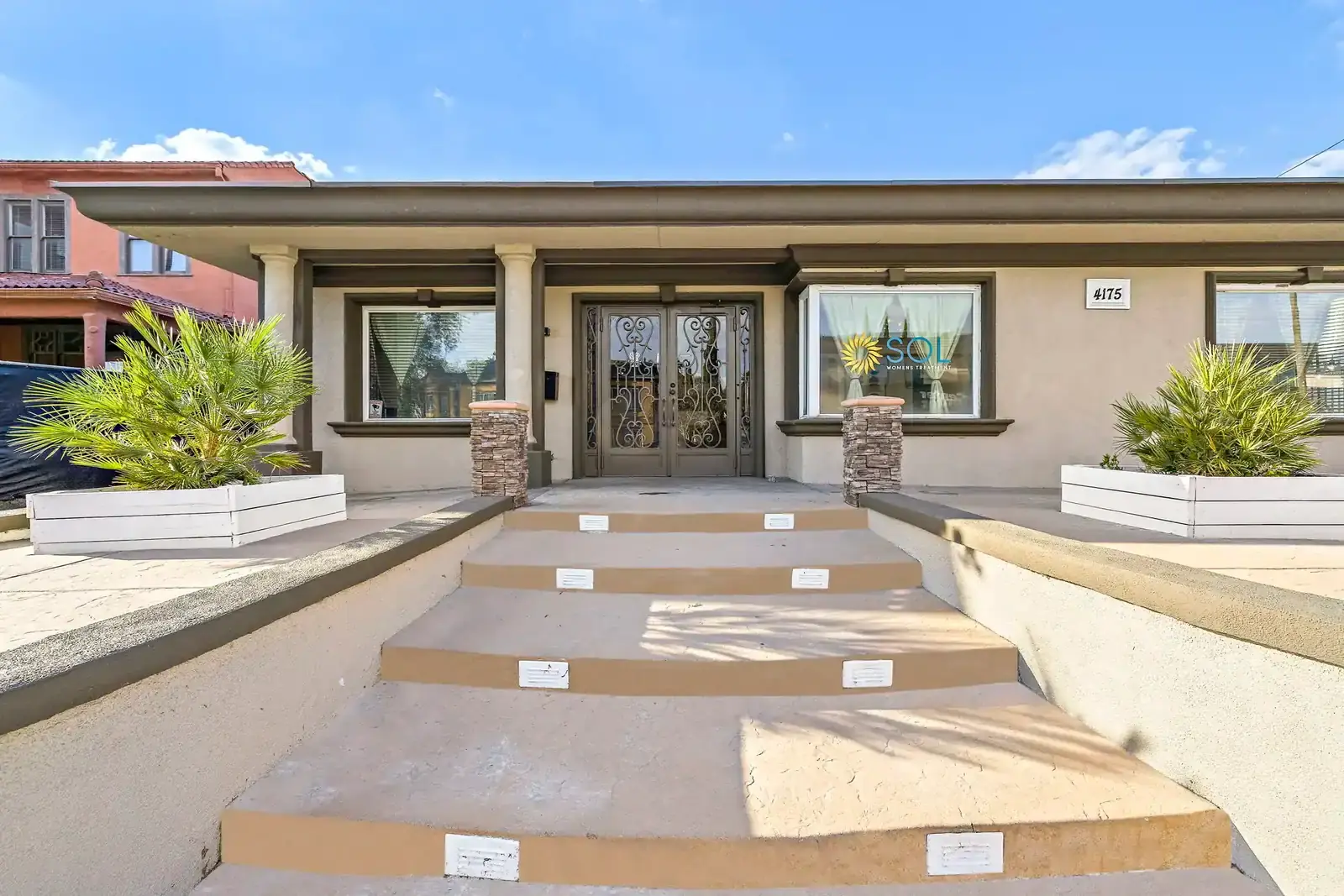
4175 Brockton Avenue, Riverside, CA 92501
Confidential. Bring the bottles or photos of the labels.
Sources11
- 1.National Institute on Drug Abuse. Misuse of Prescription Drugs Research Report: Overview. https://nida.nih.gov/publications/research-reports/misuse-prescription-drugs/overview
- 2.Centers for Disease Control and Prevention. About Prescription Opioids. https://www.cdc.gov/overdose-prevention/about/prescription-opioids.html
- 3.Substance Abuse and Mental Health Services Administration. Key Substance Use and Mental Health Indicators in the United States: Results from the 2024 National Survey on Drug Use and Health. https://www.samhsa.gov/data/sites/default/files/reports/rpt56287/2024-nsduh-annual-national-report.pdf
- 4.Centers for Disease Control and Prevention. Preventing Opioid Use Disorder. https://www.cdc.gov/overdose-prevention/prevention/preventing-opioid-use-disorder.html
- 5.Substance Abuse and Mental Health Services Administration, Center for Behavioral Health Statistics and Quality. How People Obtain the Prescription Pain Relievers They Misuse, January 12, 2017, using 2013-2014 data. https://www.samhsa.gov/data/sites/default/files/report_2686/ShortReport-2686.html
- 6.National Institute on Drug Abuse. Misuse of Prescription Drugs Research Report: How can prescription drug addiction be treated? https://nida.nih.gov/publications/research-reports/misuse-prescription-drugs/how-can-prescription-drug-addiction-be-treated
- 7.US Drug Enforcement Administration. Fake Prescription Pills fact sheet. https://www.dea.gov/factsheets/fake-prescription-pills
- 8.US Drug Enforcement Administration. DEA Laboratory Testing Reveals that 6 out of 10 Fentanyl-Laced Fake Prescription Pills Now Contain a Potentially Lethal Dose of Fentanyl, 2022 analysis. https://www.dea.gov/alert/dea-laboratory-testing-reveals-6-out-10-fentanyl-laced-fake-prescription-pills-now-contain
- 9.Centers for Disease Control and Prevention. Drug Overdose Deaths with Evidence of Counterfeit Pill Use, United States, July 2019-December 2021. MMWR 2023;72(35). https://www.cdc.gov/mmwr/volumes/72/wr/mm7235a3.htm
- 10.National Institute on Drug Abuse. Substance Use in Women Research Report: Sex Differences in Substance Use. https://nida.nih.gov/publications/research-reports/substance-use-in-women/sex-differences-in-substance-use
- 11.Centers for Disease Control and Prevention. Treatment for Opioid Use Disorder: Population Estimates, United States, 2022. MMWR, June 27, 2024. https://www.cdc.gov/mmwr/volumes/73/wr/mm7325a1.htm
Medical Disclaimer
This page is educational and is not medical advice. It does not contain tapering instructions, dosing information or a withdrawal schedule, and it should not be used to decide whether or how to change a prescribed medication. Stopping some medications abruptly, including benzodiazepines, can be life-threatening. Those decisions belong to a prescriber. Sol Women’s Treatment is certified by DHCS for outpatient and intensive outpatient services (330246AP) and licensed by CDSS (facility 331881576), and does not provide detox, inpatient or residential care. No two women respond identically and nothing here promises a result. In a medical emergency call 911. If you are in crisis, call or text 988.