



Clinically Reviewed by

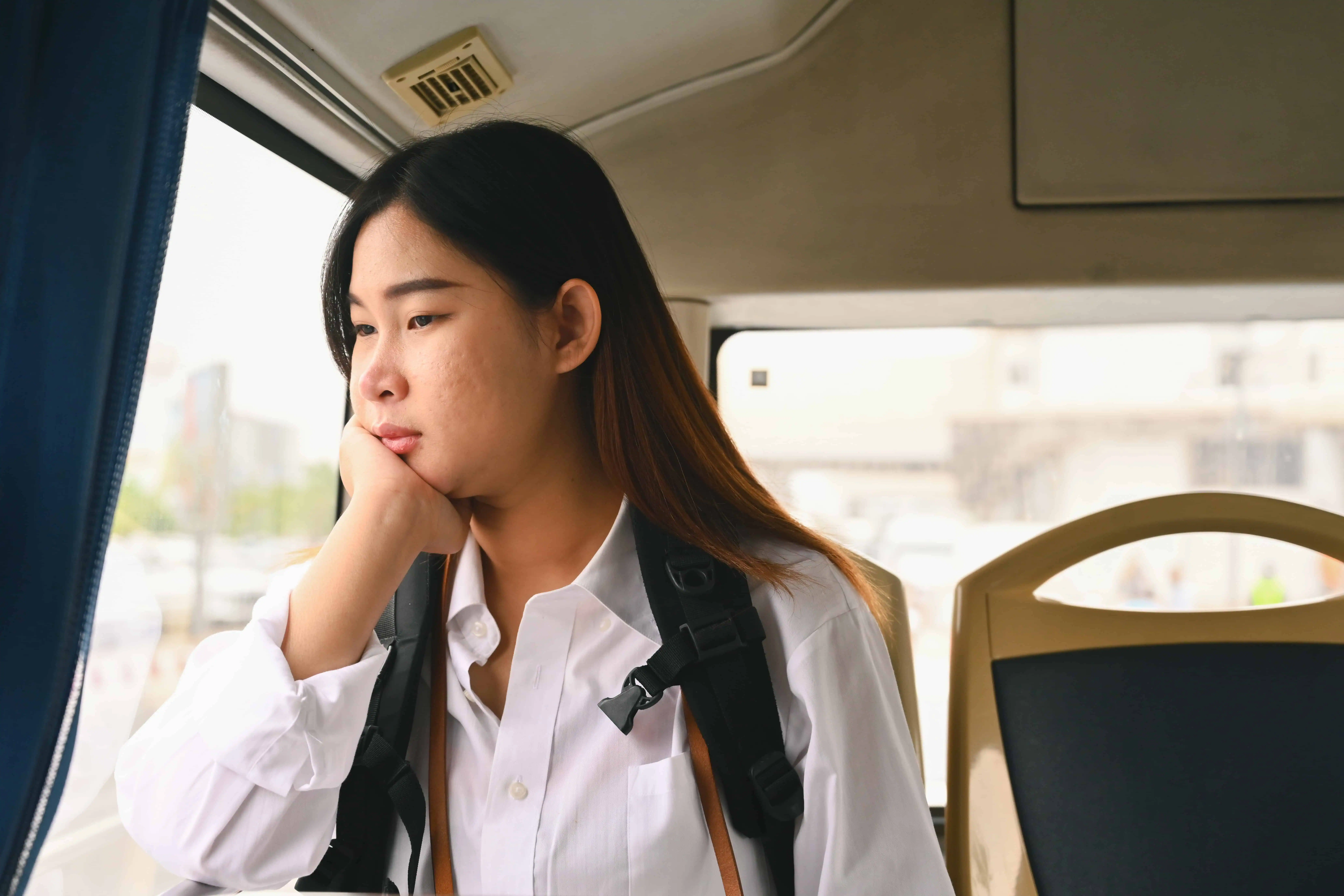
Commuting to UC Riverside or another Riverside-area campus can quietly chip away at your mental health. The long drives, the parking scramble, the rushed mornings, the late-night returns — it adds up. If your commute has started to feel like it’s costing you more than time, you’re not imagining it. Our off-campus support for women attending UC Riverside was built for exactly this — students juggling long drives, full schedules, and the emotional weight that comes with both.


What Commuter Stress Looks Like for College Students
Commuter stress is the cumulative emotional, physical, and mental strain that builds when getting to and from campus becomes a daily friction point. It’s not a single bad day — it’s a pattern. And for college students, that pattern often shows up as eaten-up study time, missed sleep, distance from on-campus life, and a quiet sense that the day already started before it began.
It’s different from typical school stress because the commute itself becomes a stressor. You’re tired before class. You’re rushing after class. You’re navigating traffic when your brain still needs to process what you just learned. If work or family lives off-campus too, the friction doesn’t fully reset on weekends.
Many students don’t name it as a mental health concern. They just call it “tired” or “stressed.” But over weeks and months, the toll is real — and worth taking seriously.
Why Riverside Commutes Hit Harder Than Most
UC Riverside has reported that more than 14,000 students commute daily — a number that shapes the entire campus experience. The 91 and 60 freeways can turn a 20-mile drive into a 90-minute crawl. Parking competition is intense, and the loop of arriving early just to find a spot adds friction before class even starts.
Many students drive in from Moreno Valley, Corona, Fontana, Rancho Cucamonga, San Bernardino, and farther. A round trip can easily reach two hours on a heavy day. Across a five-day school week, that’s ten hours — a full workday — quietly absorbed by the commute alone.
The IE traffic patterns are part of it. So is the cost-of-living math that pushes many students to live with family rather than near campus. It’s not a failure of effort; it’s the daily reality of attending college in a region this large. For a wider look at the UCR-specific picture, our broader UCR off-campus mental health resources walk through how this all fits together.
The Mental Health Toll of Long Commutes
Research has consistently linked long commutes to higher rates of anxiety, depression, sleep loss, and burnout. The mechanisms are layered — chronic low-grade stress activation, lost personal time, social isolation, and less room for the basics that protect mental health (sleep, movement, cooking, real connection).
For students, the toll often shows up as:
If several of these have crept in over the past few months, it may be a sign your mental health needs more support.
If campus resources are not covering it, our guide on care beyond the counseling center outlines when to look off campus.
Signs Your Commute Is Affecting Your Mental Health
Not every hard week is a crisis. But there’s a difference between a tough Tuesday and a pattern. The pattern signals are the ones worth paying attention to.
Watch for:
These can be early signs of high-functioning anxiety, burnout, or depression — and all three are treatable.
How Commuter Stress Lands Differently for Women
Women navigating a long college commute often carry layers their male peers don’t.
Safety is one. Late drives, dim parking structures, public transit at night — the constant low-grade vigilance is its own mental load.
Caregiving is another. Many women drive home to family responsibilities — younger siblings, kids, aging parents — and the day doesn’t end when the car parks. That second shift eats into recovery time that others may protect more easily.
Hormonal patterns matter too. Sleep deprivation interacts with menstrual cycles, postpartum recovery, and stress hormones in ways that can amplify anxiety and low mood. Some weeks the same commute feels manageable. Other weeks, the body is already running on less.
Our Women’s Wellness Program was built with these layers in mind. The all-female environment lets women set down the constant vigilance — even briefly — and the small-census setting (maximum 25 clients at a time) keeps the experience personal.
Practical Ways to Reduce Commuter Stress
Small changes compound. None of these replace professional support for clinical anxiety or depression, but most students feel meaningful relief from layering several of them together.
If you’re already trying most of the above and still feel like you’re running on fumes, that’s worth listening to. For some women, working with a clinician on mindfulness-based therapy is the missing piece — especially when the feeling has shifted from “stressed” to chronic overwhelm.
When Commuter Stress Becomes Something More Serious
There’s a point where strategies aren’t enough — and reaching for support isn’t a failure. It’s a smart, protective move.
Consider talking to a professional if:
Outpatient mental health care is designed to fit alongside school and a commute — not interrupt them. You don’t have to leave UCR or your job to get real support.

How Sol Women’s Treatment Supports Commuting Students in Riverside
Sol is an all-female outpatient program in Riverside, just minutes from UCR. We were built specifically for women navigating mental health, trauma, and stress-driven concerns — with a maximum of 25 clients at a time, so no one becomes a number.
Our Student Support Program weaves in the realities of academic life — class schedules, commute windows, exam weeks — instead of fighting them. Care is structured in levels you can scale to your life:
How to Get Started
You don’t have to have it all figured out before reaching out. The first call is short, gentle, and built around what you’re already dealing with.
Frequently Asked Questions

Written by the Sol Women’s Treatment clinical team and reviewed by Tania Acevedo, MA, LPCC. Content is grounded in women’s mental health, trauma-informed care, and outpatient behavioral health practice. Updated regularly for clinical accuracy.
This article is for informational and educational purposes only and does not constitute medical advice, diagnosis, or treatment recommendations. If you or someone you know is experiencing a mental health crisis, please contact a qualified healthcare provider or call 988 (Suicide & Crisis Lifeline). Sol Women’s Treatment is a CDSS-licensed outpatient program — not inpatient or residential care. Individual results vary and no specific outcomes are guaranteed.