

Trauma therapy for women is gentle, evidence-based care that helps you feel safe again, calm your body, and make sense of what happened, at your own pace. It is care shaped around women’s experiences, in a space that feels understanding rather than clinical. If you are in Riverside or anywhere across the Inland Empire, this guide walks you through what trauma therapy looks like, the approaches we use, and how to take a small first step whenever you feel ready.


Sol sun
TL;DR

Trauma therapy for women is warm, paced, evidence-based care that starts with safety before any deeper processing. At Sol, it happens in a women-only outpatient setting using approaches like EMDR, somatic work, CBT, DBT, and group support. You never have to figure out coverage on your own, we can help you verify your insurance and talk through what fits.

Sol sun
Key Takeaways
01Safety comes first. Good trauma care starts with feeling grounded and steady before any memory work begins.
02You set the pace. Nothing is rushed. You stay in control of how quickly things move.
03A women-only space helps. Many women feel safer, and open up more easily, in an all-female setting.
04Care fits your life. Outpatient levels (PHP, IOP, OP) offer different amounts of structure while you stay at home.
05We help with the practical parts. A woman from our admissions team responds within 24 hours to help you verify insurance and plan next steps.

What trauma therapy for women means

Trauma therapy helps ease the emotional and physical weight that can linger after frightening or painful experiences. For women, that often means care built around gendered experiences like abuse, assault, or relationship harm.

At Sol, this care lives inside our trauma-targeted program for women, where safety, connection, and steady pacing come first. The goal is not to erase your past. It is to help you feel safe in your body and life again.

This approach follows trauma-informed principles described by the Substance Abuse and Mental Health Services Administration (SAMHSA), which center safety, trust, choice, collaboration, and empowerment. In practice, that means care that never pushes you faster than you are ready to go.

Young woman quietly carrying the weight of work and school stress

Why a women-only space helps

An all-female setting can lower the everyday cues that reactivate painful memories. It softens the fear of judgment and makes it easier to speak openly. For many women, that safety is what makes real healing achievable.

Gendered harms like sexual assault, domestic violence, and coercive relationships can leave layered, lasting effects. RAINN reports that about one in six women in the United States has experienced attempted or completed rape, which can raise the risk of post-traumatic stress and depression. Care that understands these patterns, including gaslighting and the cycle many survivors know as battered woman syndrome, tends to feel more validating.

cropped web app manifest 512x512 1 | Trauma Therapy for Women: Evidence-Based Options, How to Choose, and Where to Find Women-Centered Care
Shared understanding. Hearing other women name similar patterns, like staying in a harmful relationship, helps you feel seen.
cropped web app manifest 512x512 1 | Trauma Therapy for Women: Evidence-Based Options, How to Choose, and Where to Find Women-Centered Care
A small, intimate community. We keep our program small, with a maximum of 25 clients, so you are never just a number.
cropped web app manifest 512x512 1 | Trauma Therapy for Women: Evidence-Based Options, How to Choose, and Where to Find Women-Centered Care
Topics that matter to women. Groups can focus gently on relationships, motherhood, and safety without having to explain the basics.

Trauma-care terms you might hear

Trauma care comes with its own vocabulary. Here are a few terms in plain language, so nothing feels confusing along the way.

Traumatic stress
The emotional and physical reactions that can follow a frightening or harmful event. They may arrive right away or much later.
Post-traumatic stress
When those reactions linger: intrusive memories, avoidance, feeling on edge, or shifts in mood.
Complex trauma
Can develop after repeated or long-lasting harm, often adding struggles with emotions, self-image, and relationships.
Dissociation and numbness
Feeling disconnected from your body, feelings, or surroundings. We explain this gently in our guide to emotional numbness.
Triggers
Sights, sounds, or situations that bring back a strong response. Noticing yours helps build a sense of safety.
Stabilization
The gentle first phase focused on safety and calming skills, before any deeper processing.
PHP, IOP, OP
The three outpatient levels of care, from the most structured (PHP) to the lightest touch (OP).

The therapies we use

There is no single right therapy for everyone. Your clinician helps you find the blend that fits your symptoms and comfort. Here is a gentle overview of approaches often used in women’s trauma care.

Approach
What it gently helps with
Typical format
Softening the intensity of distressing memories so they feel less overwhelming.
Individual, usually once you feel steady.
Noticing and easing the anxious thoughts that keep trauma feeling present.
Individual or group, practical and structured.
Working with the body when trauma shows up as tension, panic, or numbness.
Individual, often alongside talk therapy.
Steadying big emotions and building calm, practical coping tools.
Skills groups plus individual support.
Healing alongside other women who understand, in a safe, guided space.
Small women-only groups.

Leading evidence reviews, including guidance summarized by the National Institute for Health and Care Excellence, point to EMDR and trauma-focused CBT as well-supported options, often delivered in roughly eight to twelve sessions. Your plan may look different, and that is completely okay.

Wondering if your plan can help cover care?
Call us at (951) 633-7724, we will walk you through it gently.
Verify Insurance →

What trauma therapy approaches fit you?

If you are wondering which approach might suit you, this can help you picture it. It is only a starting point, not a diagnosis. You and your clinician decide together, and the plan can change as you do.

What you may be feeling
Approaches that often help
A gentle next step
Vivid memories or nightmares
EMDR or trauma-focused CBT
We focus gently on the memories once you feel ready.
Big waves of emotion
DBT skills and steadying groups
Calm, practical tools come first.
Tension, panic, or numbness in the body
Somatic therapy and mindful movement
Body-based work can ease the way in.
Trauma alongside substance use
Integrated trauma and addiction support
We care for both together, not in pieces.
Pregnancy or the postpartum season
Gentle, pregnancy-aware approaches
Coordinated with your OB for a tender time.

Finding the right level of care

Some weeks you may need more structure, and some less. Our outpatient levels of care let you receive steady support while you stay in your own home. If ever you need more than outpatient care can safely offer, we will help you find the right place.

Level
What it involves
Good fit for
PHP
Partial Hospitalization
Learn more ↗
The most structured outpatient option, with therapeutic hours most days and no overnight stay.
Women who want daily support during a tender, high-need season.
IOP
Intensive Outpatient
Learn more ↗
Several sessions a week, with room to keep up work, school, and home life.
Women who want focused care while holding onto daily routines.
OP
Outpatient Program
Learn more ↗
Weekly therapy and gentle continuing care to help you stay steady.
Women feeling more stable and wanting ongoing, lighter-touch support.

When stable housing is part of feeling safe enough to heal, our supportive housing for women offers a calm place to stay within our outpatient program, with a female house manager available around the clock.

If your safety ever needs more than outpatient care can offer, a higher level of care, including inpatient care that Sol does not provide, may be the kindest next step. We will always help you find the right place and stay connected to your care.

When trauma comes with other struggles

Trauma often travels with other things, like anxiety, low mood, or substance use. When that happens, we care for everything together rather than in pieces. Treating co-occurring conditions at the same time tends to feel more supportive and whole.

If your trauma centers on post-traumatic stress, care focuses first on grounding and steadiness. Pregnancy and the months after birth deserve extra gentleness, so care during this time coordinates closely with your OB or midwife, with routine, non-judgmental check-ins about mood and safety.

Trauma can also follow a hard medical experience, like a difficult birth or a long hospital stay. Our team can coordinate with your doctors so that therapy and medical care support each other, and we can help women navigating postpartum depression alongside trauma.
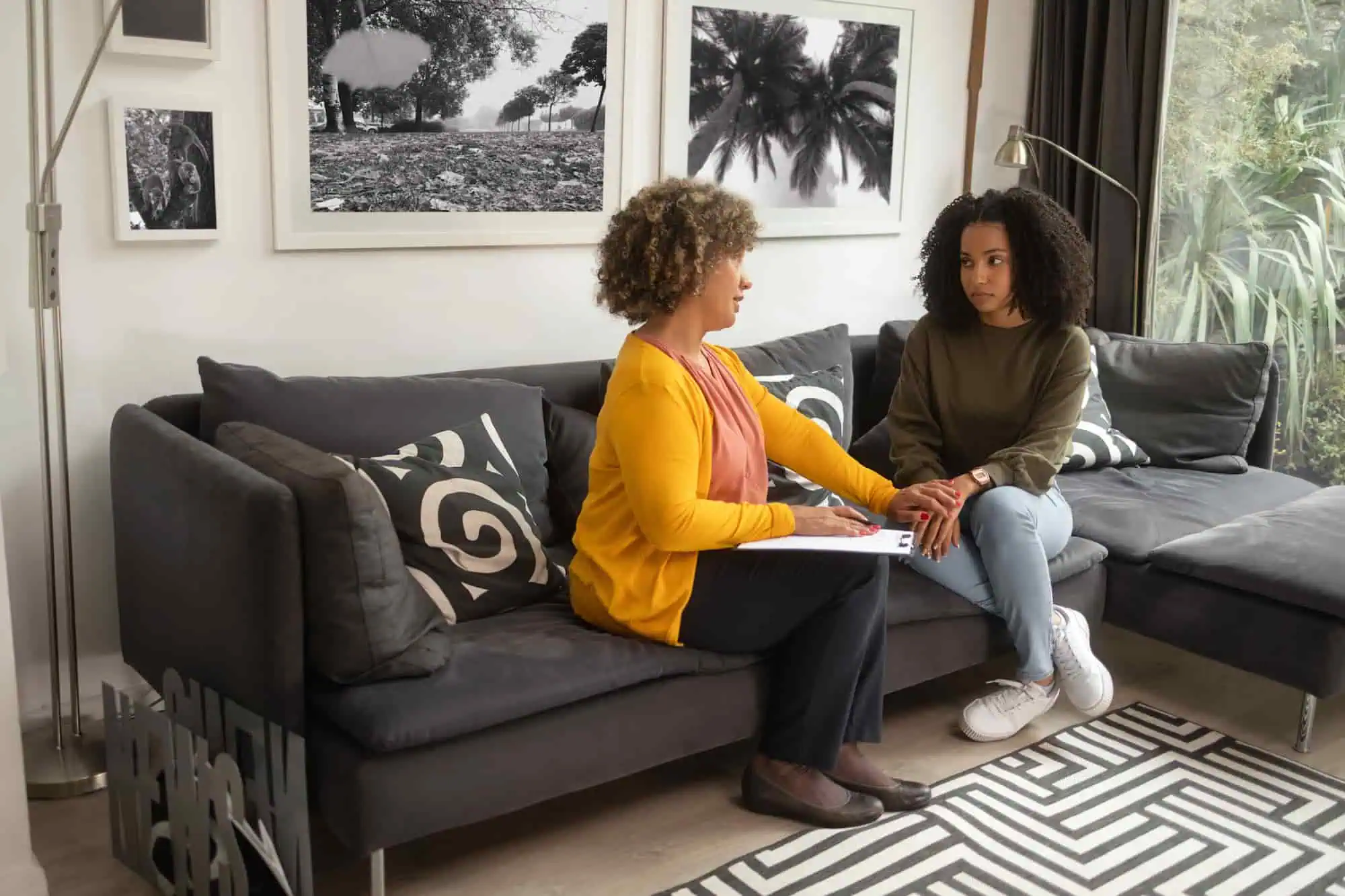
A woman meeting with a female therapist during a gentle first counseling session

What your first visits feel like

The beginning is calm and unhurried. There is no pressure to share more than you want to. Here is what those early steps usually look like.

1
A warm welcome
We start with a conversation and some simple paperwork, and explain how confidentiality works.
2
Getting to know you
Your clinician listens to what you are going through and helps build a plan that fits your life. We may use a few short, standard check-ins to understand how you are doing and track progress gently.
3
Steady, calming skills first
Early sessions teach grounding and soothing tools you can use anytime, before any deeper work begins.

The calming skills you learn early on are simple and portable, things like slow breathing, grounding your senses in the present moment, movement, and naming what you feel. You are also always welcome to ask us questions, such as:

cropped web app manifest 512x512 1 | Trauma Therapy for Women: Evidence-Based Options, How to Choose, and Where to Find Women-Centered Care
How do you pace trauma work, and how will we know when I am ready to go deeper?
cropped web app manifest 512x512 1 | Trauma Therapy for Women: Evidence-Based Options, How to Choose, and Where to Find Women-Centered Care
What therapies do you use with women, and how do you choose?
cropped web app manifest 512x512 1 | Trauma Therapy for Women: Evidence-Based Options, How to Choose, and Where to Find Women-Centered Care
What happens if I feel triggered during or between sessions?
Ready when you are
Verify Insurance →

How to prepare for your first call

A little preparation can make that first conversation feel easier. None of this is required, so bring what you can and leave the rest.

cropped web app manifest 512x512 1 | Trauma Therapy for Women: Evidence-Based Options, How to Choose, and Where to Find Women-Centered Care
A quiet, private place to talk, if you have one.
cropped web app manifest 512x512 1 | Trauma Therapy for Women: Evidence-Based Options, How to Choose, and Where to Find Women-Centered Care
A rough sense of what has felt hardest lately. The words do not need to be perfect.
cropped web app manifest 512x512 1 | Trauma Therapy for Women: Evidence-Based Options, How to Choose, and Where to Find Women-Centered Care
Any medications you take, and your insurance card if you have one.
cropped web app manifest 512x512 1 | Trauma Therapy for Women: Evidence-Based Options, How to Choose, and Where to Find Women-Centered Care
The name of someone we can reach in an emergency.

You never have to share everything at once. Intake happens step by step, and your pace guides us.

A note on insurance

Cost worries should never stand between you and care. You do not have to sort out coverage alone, and you never have to decide anything on the phone.

The easiest first step is to verify your insurance through our short, private form. A woman from our admissions team responds within 24 hours to explain what your plan may allow, with no pressure at all.

If you need support right now

If you are in immediate danger, please call 911. For emotional support any time, call or text 988 to reach the Suicide and Crisis Lifeline.

The National Domestic Violence Hotline (1-800-799-7233) and RAINN (1-800-656-4673) are both free, confidential, and available around the clock. You deserve support, and reaching out is a brave first step.

Closer to home, Riverside County and San Bernardino County both have behavioral health access lines for same-day support and referrals, and local hospitals can connect you with a Sexual Assault Response Team or a victim advocate. If you are not sure who to call, your city’s non-emergency police line can point you to the right team.

Questions women often ask

cropped web app manifest 512x512 1 | Trauma Therapy for Women: Evidence-Based Options, How to Choose, and Where to Find Women-Centered Care
sol sun white | Trauma Therapy for Women: Evidence-Based Options, How to Choose, and Where to Find Women-Centered Care
Is trauma therapy going to make me relive everything?
cropped web app manifest 512x512 1 | Trauma Therapy for Women: Evidence-Based Options, How to Choose, and Where to Find Women-Centered Care
sol sun white | Trauma Therapy for Women: Evidence-Based Options, How to Choose, and Where to Find Women-Centered Care
Why choose a women-only program?
cropped web app manifest 512x512 1 | Trauma Therapy for Women: Evidence-Based Options, How to Choose, and Where to Find Women-Centered Care
sol sun white | Trauma Therapy for Women: Evidence-Based Options, How to Choose, and Where to Find Women-Centered Care
Is Sol residential or outpatient?
cropped web app manifest 512x512 1 | Trauma Therapy for Women: Evidence-Based Options, How to Choose, and Where to Find Women-Centered Care
sol sun white | Trauma Therapy for Women: Evidence-Based Options, How to Choose, and Where to Find Women-Centered Care
How do I know which level of care fits?
cropped web app manifest 512x512 1 | Trauma Therapy for Women: Evidence-Based Options, How to Choose, and Where to Find Women-Centered Care
sol sun white | Trauma Therapy for Women: Evidence-Based Options, How to Choose, and Where to Find Women-Centered Care
Do you help with insurance?
cropped web app manifest 512x512 1 | Trauma Therapy for Women: Evidence-Based Options, How to Choose, and Where to Find Women-Centered Care
sol sun white | Trauma Therapy for Women: Evidence-Based Options, How to Choose, and Where to Find Women-Centered Care
Where is Sol located?
Answer
Is trauma therapy going to make me relive everything?
No. Good trauma care starts with safety and steadying skills, and you never process anything faster than you feel ready to. You stay in control the whole way.
Tania Acevedo, MA, LPCC
Founder & Chief Clinical Officer · Sol Women’s Treatment

Written by the Sol Women’s Treatment clinical team and reviewed by Tania Acevedo, MA, LPCC. Content is grounded in women’s mental health, trauma-informed care, and outpatient behavioral health practice. Updated regularly for clinical accuracy.

CDSS Licensed Outpatient · Riverside, CA Women’s Mental Health
Medical Disclaimer

This article is for informational and educational purposes only and does not constitute medical advice, diagnosis, or treatment recommendations. If you or someone you know is experiencing a mental health crisis, please contact a qualified healthcare provider or call 988 (Suicide & Crisis Lifeline). Sol Women’s Treatment is a CDSS-licensed outpatient program, not inpatient or residential care. Individual results vary and no specific outcomes are guaranteed.

beautiful smiling young asian student holding text 2026 01 06 00 42 45 utc scaled | Trauma Therapy for Women: Evidence-Based Options, How to Choose, and Where to Find Women-Centered Care
Sol sun
A safe space to heal, in your time
Whenever you feel ready, we are here. You can reach the Sol Women’s Treatment team with any question, big or small.